Latest News

Alibaba just released Qwen 3.5 Small models: a family of 0.8B to 9B parameters built for on-device applications
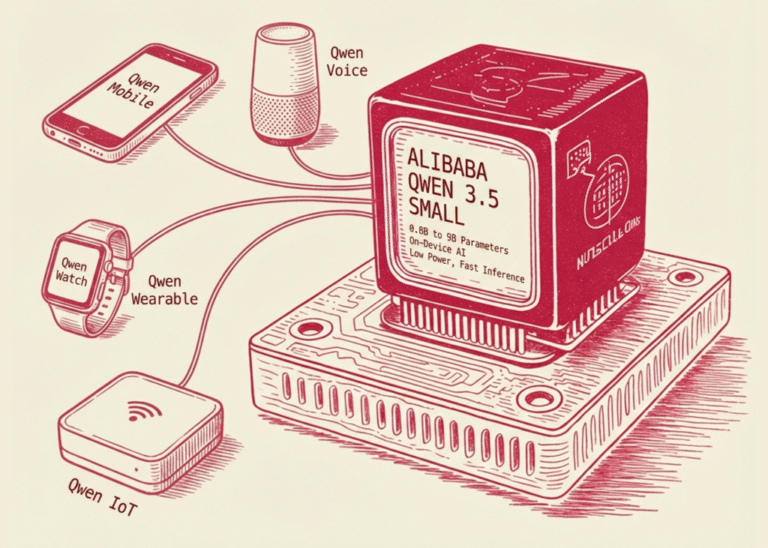
Alibaba’s Qwen team has released the Qwen3.5 Small Model Series, a collection of Large Language Models (LLMs) ranging from 0.8B to 9B parameters. While the industry trend has historically favored increasing parameter counts to achieve ‘frontier’ performance, this release focuses…
Read MoreAlibaba just released Qwen 3.5 Small models: a family of 0.8B to 9B parameters built for on-device applications

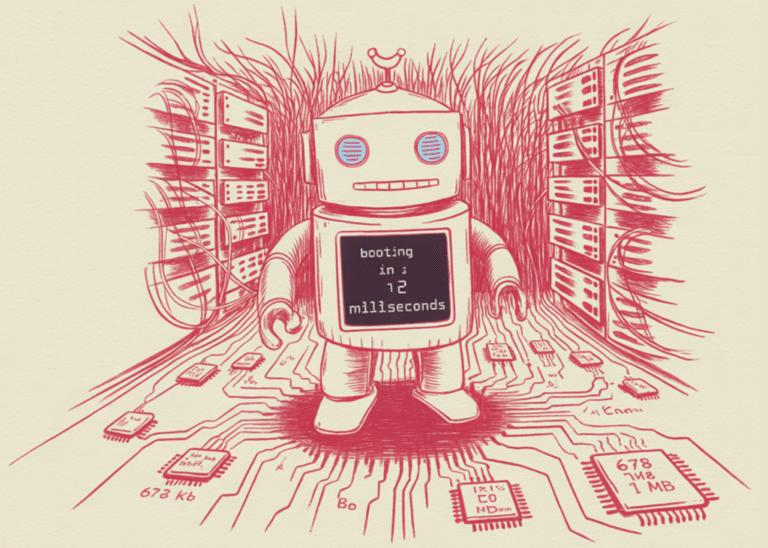
Meet NullClaw: The 678 KB Zig AI Agent Framework Running on 1 MB RAM and Booting in Two Milliseconds

In the current AI landscape, agentic frameworks typically rely on high-level managed languages like Python or Go. While these ecosystems offer extensive libraries, they introduce significant overhead through runtimes, virtual machines, and garbage collectors. NullClaw is a project that diverges…

Read MoreMeet NullClaw: The 678 KB Zig AI Agent Framework Running on 1 MB RAM and Booting in Two Milliseconds

How to Build an Explainable AI Analysis Pipeline Using SHAP-IQ to Understand Feature Importance, Interaction Effects, and Model Decision Breakdown

INSTANCE_I = int(np.clip(INSTANCE_I, 0, len(X_test)-1)) x = X_test.iloc[INSTANCE_I].values y_true = float(y_test.iloc[INSTANCE_I]) pred = float(model.predict([x])[0]) iv = explainer.explain(x, budget=int(BUDGET_LOCAL), random_state=0) baseline = float(getattr(iv, “baseline_value”, 0.0)) main_effects = extract_main_effects(iv, feature_names) pair_df = extract_pair_matrix(iv, feature_names) print(“\n” + “=”*90) print(“LOCAL EXPLANATION (single test instance)”)…

Read MoreHow to Build an Explainable AI Analysis Pipeline Using SHAP-IQ to Understand Feature Importance, Interaction Effects, and Model Decision Breakdown

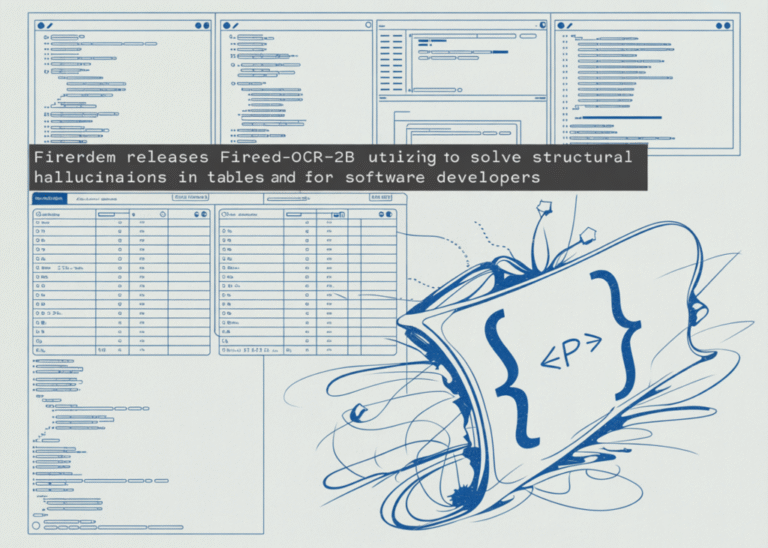
FireRedTeam Releases FireRed-OCR-2B Utilizing GRPO to Solve Structural Hallucinations in Tables and LaTeX for Software Developers

Document digitization has long been a multi-stage problem: first detect the layout, then extract the text, and finally try to reconstruct the structure. For Large Vision-Language Models (LVLMs), this often leads to ‘structural hallucinations’—disordered rows, invented formulas, or unclosed syntax.…

Read MoreFireRedTeam Releases FireRed-OCR-2B Utilizing GRPO to Solve Structural Hallucinations in Tables and LaTeX for Software Developers

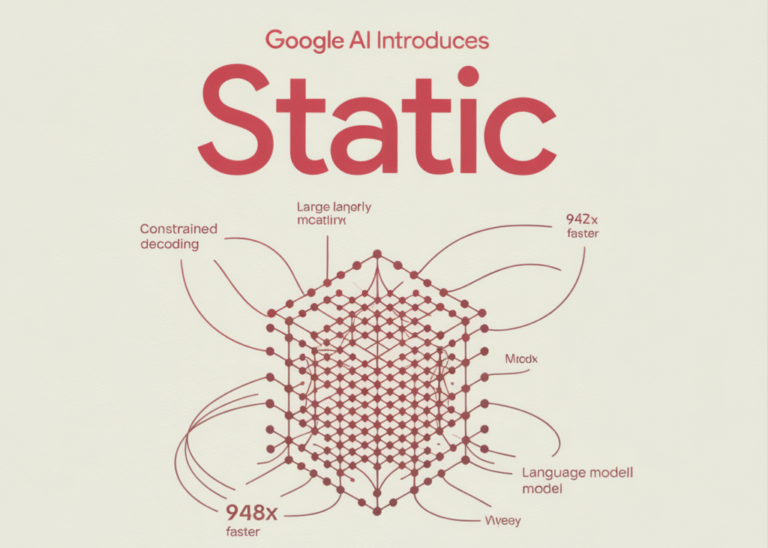
Google AI Introduces STATIC: A Sparse Matrix Framework Delivering 948x Faster Constrained Decoding for LLM Based Generative Retrieval

In industrial recommendation systems, the shift toward Generative Retrieval (GR) is replacing traditional embedding-based nearest neighbor search with Large Language Models (LLMs). These models represent items as Semantic IDs (SIDs)—discrete token sequences—and treat retrieval as an autoregressive decoding task. However,…

Read MoreGoogle AI Introduces STATIC: A Sparse Matrix Framework Delivering 948x Faster Constrained Decoding for LLM Based Generative Retrieval

How to Design a Production-Grade Multi-Agent Communication System Using LangGraph Structured Message Bus, ACP Logging, and Persistent Shared State Architecture

In this tutorial, we build an advanced multi-agent communication system using a structured message bus architecture powered by LangGraph and Pydantic. We define a strict ACP-style message schema that allows agents to communicate via a shared state rather than calling…

Read MoreHow to Design a Production-Grade Multi-Agent Communication System Using LangGraph Structured Message Bus, ACP Logging, and Persistent Shared State Architecture

Alibaba Team Open-Sources CoPaw: A High-Performance Personal Agent Workstation for Developers to Scale Multi-Channel AI Workflows and Memory

As the industry moves from simple Large Language Model (LLM) inference toward autonomous agentic systems, the challenge for devs have shifted. It is no longer just about the model; it is about the environment in which that model operates. A…

Read MoreAlibaba Team Open-Sources CoPaw: A High-Performance Personal Agent Workstation for Developers to Scale Multi-Channel AI Workflows and Memory

A Complete End-to-End Coding Guide to MLflow Experiment Tracking, Hyperparameter Optimization, Model Evaluation, and Live Model Deployment

best_C = best[“params”][“C”] best_solver = best[“params”][“solver”] final_pipe = Pipeline([ (“scaler”, StandardScaler()), (“clf”, LogisticRegression( C=best_C, solver=best_solver, penalty=”l2″, max_iter=2000, random_state=42 )) ]) with mlflow.start_run(run_name=”final_model_run”) as final_run: final_pipe.fit(X_train, y_train) proba = final_pipe.predict_proba(X_test)[:, 1] pred = (proba >= 0.5).astype(int) metrics = { “test_auc”: float(roc_auc_score(y_test,…

Read MoreA Complete End-to-End Coding Guide to MLflow Experiment Tracking, Hyperparameter Optimization, Model Evaluation, and Live Model Deployment

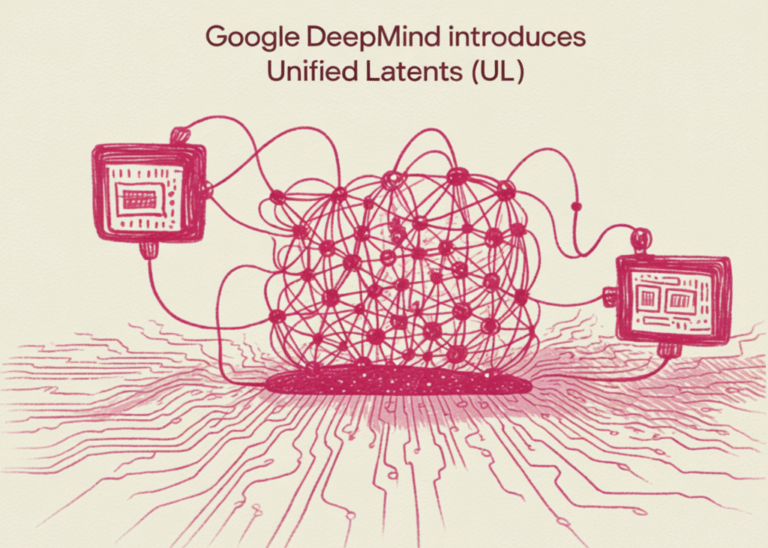
Google DeepMind Introduces Unified Latents (UL): A Machine Learning Framework that Jointly Regularizes Latents Using a Diffusion Prior and Decoder

Generative AI’s current trajectory relies heavily on Latent Diffusion Models (LDMs) to manage the computational cost of high-resolution synthesis. By compressing data into a lower-dimensional latent space, models can scale effectively. However, a fundamental trade-off persists: lower information density makes…

Read MoreGoogle DeepMind Introduces Unified Latents (UL): A Machine Learning Framework that Jointly Regularizes Latents Using a Diffusion Prior and Decoder

A Coding Implementation to Build a Hierarchical Planner AI Agent Using Open-Source LLMs with Tool Execution and Structured Multi-Agent Reasoning

def executor_agent(step: Dict[str, Any], context: Dict[str, Any]) -> StepResult: step_id = int(step.get(“id”, 0)) title = step.get(“title”, f”Step {step_id}”) tool = step.get(“tool”, “llm”) ctx_compact = { “goal”: context.get(“goal”), “assumptions”: context.get(“assumptions”, []), “prior_results”: [ {“step_id”: r.step_id, “title”: r.title, “tool”: r.tool, “output”: r.output[:1500]}…

Read MoreA Coding Implementation to Build a Hierarchical Planner AI Agent Using Open-Source LLMs with Tool Execution and Structured Multi-Agent Reasoning