Latest News

Liquid AI’s New LFM2-24B-A2B Hybrid Architecture Blends Attention with Convolutions to Solve the Scaling Bottlenecks of Modern LLMs

The generative AI race has long been a game of ‘bigger is better.’ But as the industry hits the limits of power consumption and memory bottlenecks, the conversation is shifting from raw parameter counts to architectural efficiency. Liquid AI team…

Read MoreLiquid AI’s New LFM2-24B-A2B Hybrid Architecture Blends Attention with Convolutions to Solve the Scaling Bottlenecks of Modern LLMs

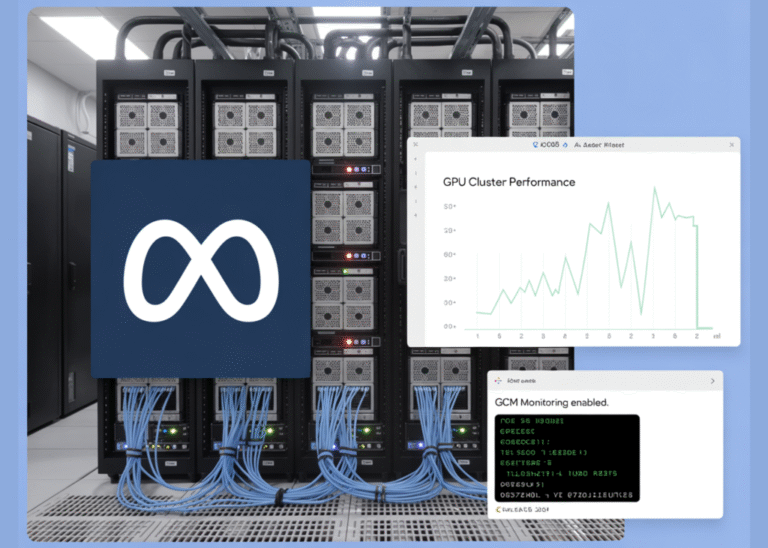
Meta AI Open Sources GCM for Better GPU Cluster Monitoring to Ensure High Performance AI Training and Hardware Reliability

While the tech folks obsesses over the latest Llama checkpoints, a much grittier battle is being fought in the basements of data centers. As AI models scale to trillions of parameters, the clusters required to train them have become some…

Read MoreMeta AI Open Sources GCM for Better GPU Cluster Monitoring to Ensure High Performance AI Training and Hardware Reliability

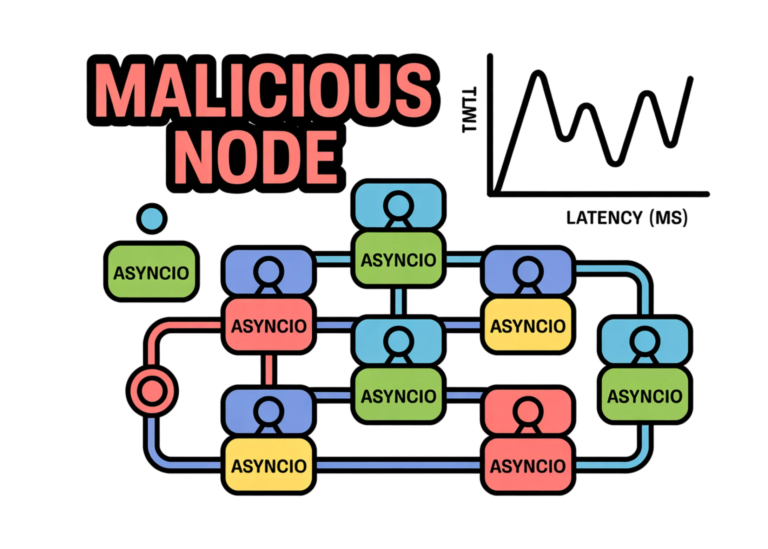
A Coding Implementation to Simulate Practical Byzantine Fault Tolerance with Asyncio, Malicious Nodes, and Latency Analysis

In this tutorial, we implement an end-to-end Practical Byzantine Fault Tolerance (PBFT) simulator using asyncio. We model a realistic distributed network with asynchronous message passing, configurable delays, and Byzantine nodes that intentionally deviate from the protocol. By explicitly implementing the…

Read MoreA Coding Implementation to Simulate Practical Byzantine Fault Tolerance with Asyncio, Malicious Nodes, and Latency Analysis

Alibaba Qwen Team Releases Qwen 3.5 Medium Model Series: A Production Powerhouse Proving that Smaller AI Models are Smarter

The development of large language models (LLMs) has been defined by the pursuit of raw scale. While increasing parameter counts into the trillions initially drove performance gains, it also introduced significant infrastructure overhead and diminishing marginal utility. The release of…

Read MoreAlibaba Qwen Team Releases Qwen 3.5 Medium Model Series: A Production Powerhouse Proving that Smaller AI Models are Smarter

Google DeepMind Researchers Apply Semantic Evolution to Create Non Intuitive VAD-CFR and SHOR-PSRO Variants for Superior Algorithmic Convergence

In the competitive arena of Multi-Agent Reinforcement Learning (MARL), progress has long been bottlenecked by human intuition. For years, researchers have manually refined algorithms like Counterfactual Regret Minimization (CFR) and Policy Space Response Oracles (PSRO), navigating a vast combinatorial space…

Read MoreGoogle DeepMind Researchers Apply Semantic Evolution to Create Non Intuitive VAD-CFR and SHOR-PSRO Variants for Superior Algorithmic Convergence

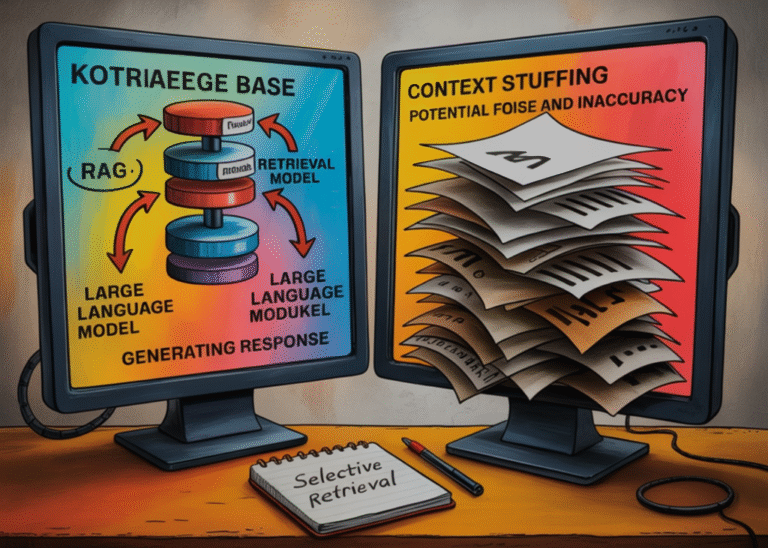
RAG vs. Context Stuffing: Why selective retrieval is more efficient and reliable than dumping all data into the prompt

Large context windows have dramatically increased how much information modern language models can process in a single prompt. With models capable of handling hundreds of thousands—or even millions—of tokens, it’s easy to assume that Retrieval-Augmented Generation (RAG) is no longer…

Read MoreRAG vs. Context Stuffing: Why selective retrieval is more efficient and reliable than dumping all data into the prompt

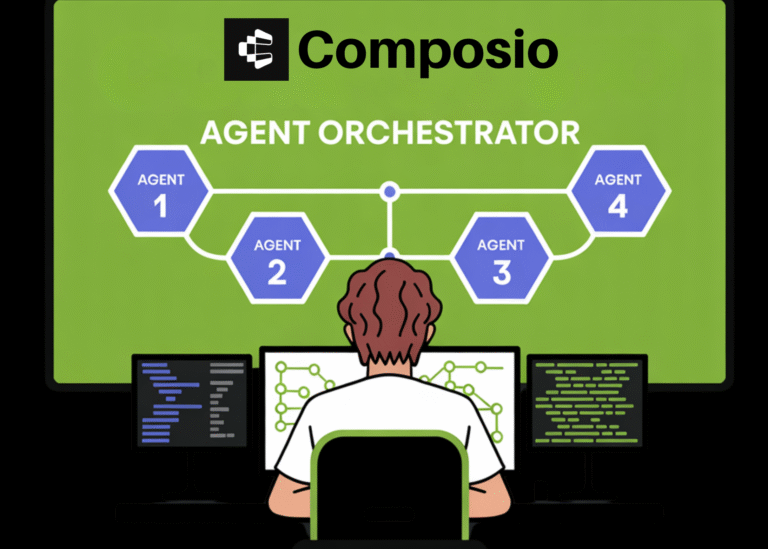
Composio Open Sources Agent Orchestrator to Help AI Developers Build Scalable Multi-Agent Workflows Beyond the Traditional ReAct Loops

For the past year, AI devs have relied on the ReAct (Reasoning + Acting) pattern—a simple loop where an LLM thinks, picks a tool, and executes. But as any software engineer who has tried to move these agents into production…

Read MoreComposio Open Sources Agent Orchestrator to Help AI Developers Build Scalable Multi-Agent Workflows Beyond the Traditional ReAct Loops

Beyond Simple API Requests: How OpenAI’s WebSocket Mode Changes the Game for Low Latency Voice Powered AI Experiences

In the world of Generative AI, latency is the ultimate killer of immersion. Until recently, building a voice-enabled AI agent felt like assembling a Rube Goldberg machine: you’d pipe audio to a Speech-to-Text (STT) model, send the transcript to a…

Read MoreBeyond Simple API Requests: How OpenAI’s WebSocket Mode Changes the Game for Low Latency Voice Powered AI Experiences

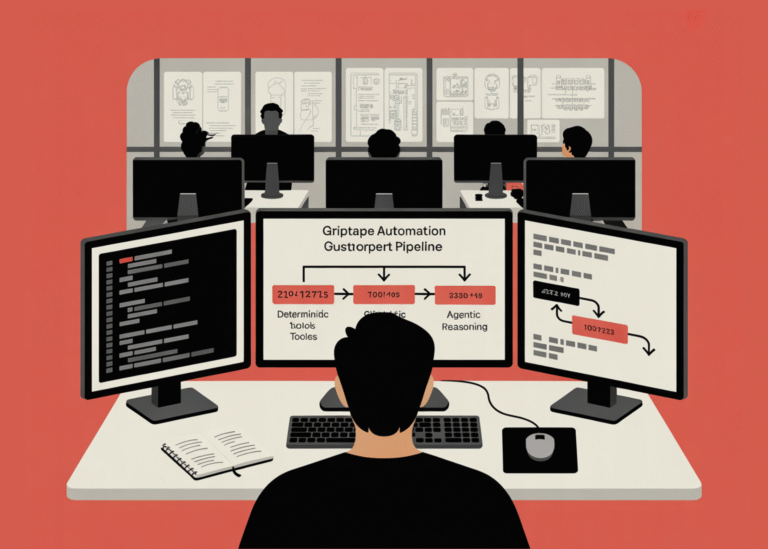
How to Build a Production-Grade Customer Support Automation Pipeline with Griptape Using Deterministic Tools and Agentic Reasoning

In this tutorial, we build an advanced Griptape-based customer support automation system that combines deterministic tooling with agentic reasoning to process real-world support tickets end-to-end. We design custom tools to sanitize sensitive information, categorize issues, assign priorities with clear SLA…

Read MoreHow to Build a Production-Grade Customer Support Automation Pipeline with Griptape Using Deterministic Tools and Agentic Reasoning