Latest News

How to Build Transparent AI Agents: Traceable Decision-Making with Audit Trails and Human Gates
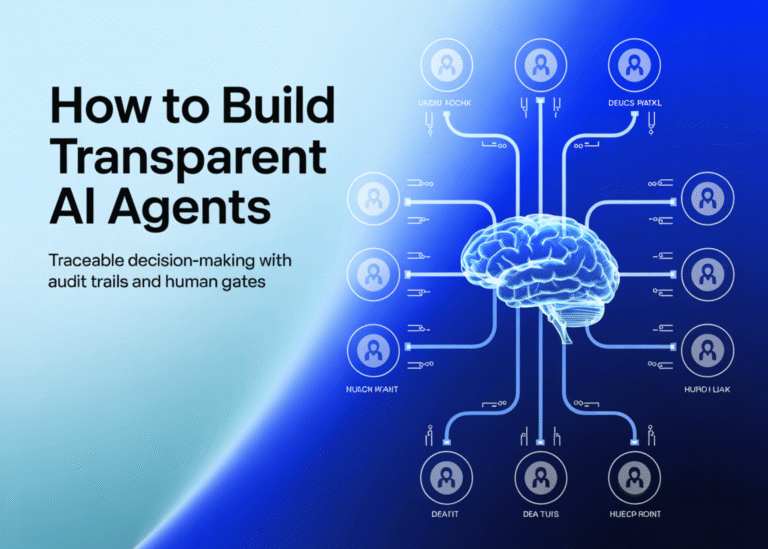
In this tutorial, we build a glass-box agentic workflow that makes every decision traceable, auditable, and explicitly governed by human approval. We design the system to log each thought, action, and observation into a tamper-evident audit ledger while enforcing dynamic…

Read MoreHow to Build Transparent AI Agents: Traceable Decision-Making with Audit Trails and Human Gates

NVIDIA Releases Dynamo v0.9.0: A Massive Infrastructure Overhaul Featuring FlashIndexer, Multi-Modal Support, and Removed NATS and ETCD

NVIDIA has just released Dynamo v0.9.0. This is the most significant infrastructure upgrade for the distributed inference framework to date. This update simplifies how large-scale models are deployed and managed. The release focuses on removing heavy dependencies and improving how…

Read MoreNVIDIA Releases Dynamo v0.9.0: A Massive Infrastructure Overhaul Featuring FlashIndexer, Multi-Modal Support, and Removed NATS and ETCD

Study: AI chatbots provide less-accurate information to vulnerable users | MIT News

Large language models (LLMs) have been championed as tools that could democratize access to information worldwide, offering knowledge in a user-friendly interface regardless of a person’s background or location. However, new research from MIT’s Center for Constructive Communication (CCC) suggests…

Read MoreStudy: AI chatbots provide less-accurate information to vulnerable users | MIT News

Google AI Releases Gemini 3.1 Pro with 1 Million Token Context and 77.1 Percent ARC-AGI-2 Reasoning for AI Agents

Google has officially shifted the Gemini era into high gear with the release of Gemini 3.1 Pro, the first version update in the Gemini 3 series. This release is not just a minor patch; it is a targeted strike at…

Read MoreGoogle AI Releases Gemini 3.1 Pro with 1 Million Token Context and 77.1 Percent ARC-AGI-2 Reasoning for AI Agents

A Coding Implementation to Build Bulletproof Agentic Workflows with PydanticAI Using Strict Schemas, Tool Injection, and Model-Agnostic Execution

In this tutorial, we build a production-ready agentic workflow that prioritizes reliability over best-effort generation by enforcing strict, typed outputs at every step. We use PydanticAI to define clear response schemas, wire in tools via dependency injection, and ensure the…

Read MoreA Coding Implementation to Build Bulletproof Agentic Workflows with PydanticAI Using Strict Schemas, Tool Injection, and Model-Agnostic Execution

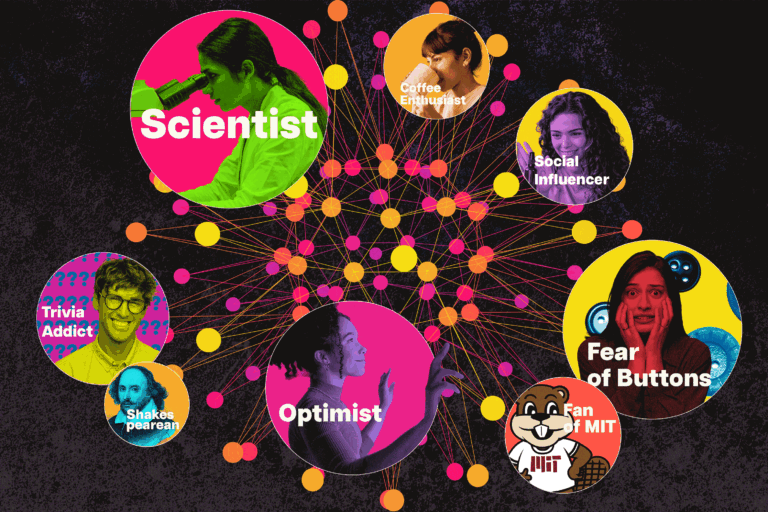
Exposing biases, moods, personalities, and abstract concepts hidden in large language models | MIT News

By now, ChatGPT, Claude, and other large language models have accumulated so much human knowledge that they’re far from simple answer-generators; they can also express abstract concepts, such as certain tones, personalities, biases, and moods. However, it’s not obvious exactly…

Read MoreExposing biases, moods, personalities, and abstract concepts hidden in large language models | MIT News

Zyphra Releases ZUNA: A 380M-Parameter BCI Foundation Model for EEG Data, Advancing Noninvasive Thought-to-Text Development

Brain-computer interfaces (BCIs) are finally having their ‘foundation model’ moment. Zyphra, a research lab focused on large-scale models, recently released ZUNA, a 380M-parameter foundation model specifically for EEG signals. ZUNA is a masked diffusion auto-encoder designed to perform channel infilling…

Read MoreZyphra Releases ZUNA: A 380M-Parameter BCI Foundation Model for EEG Data, Advancing Noninvasive Thought-to-Text Development

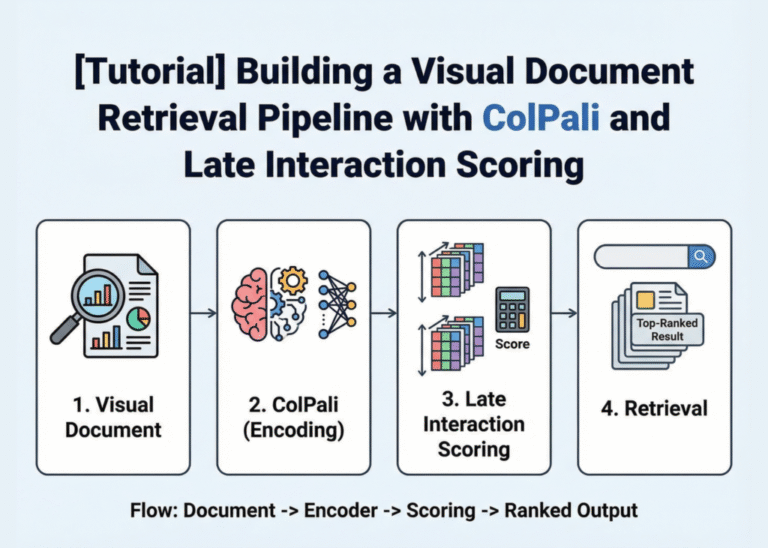
[Tutorial] Building a Visual Document Retrieval Pipeline with ColPali and Late Interaction Scoring

import subprocess, sys, os, json, hashlib def pip(cmd): subprocess.check_call([sys.executable, “-m”, “pip”] + cmd) pip([“uninstall”, “-y”, “pillow”, “PIL”, “torchaudio”, “colpali-engine”]) pip([“install”, “-q”, “–upgrade”, “pip”]) pip([“install”, “-q”, “pillow<12”, “torchaudio==2.8.0”]) pip([“install”, “-q”, “colpali-engine”, “pypdfium2”, “matplotlib”, “tqdm”, “requests”]) Source link

Read More[Tutorial] Building a Visual Document Retrieval Pipeline with ColPali and Late Interaction Scoring

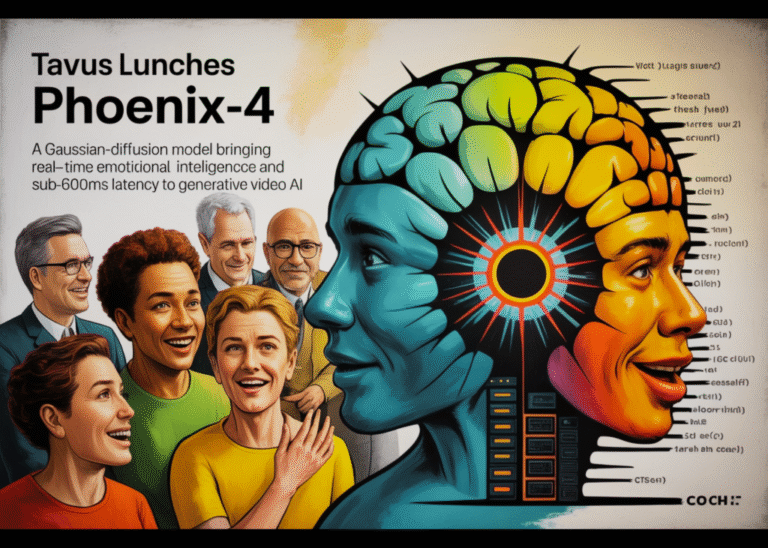
Tavus Launches Phoenix-4: A Gaussian-Diffusion Model Bringing Real-Time Emotional Intelligence And Sub-600ms Latency To Generative Video AI

The ‘uncanny valley’ is the final frontier for generative video. We have seen AI avatars that can talk, but they often lack the soul of human interaction. They suffer from stiff movements and a lack of emotional context. Tavus aims…

Read MoreTavus Launches Phoenix-4: A Gaussian-Diffusion Model Bringing Real-Time Emotional Intelligence And Sub-600ms Latency To Generative Video AI