Latest News

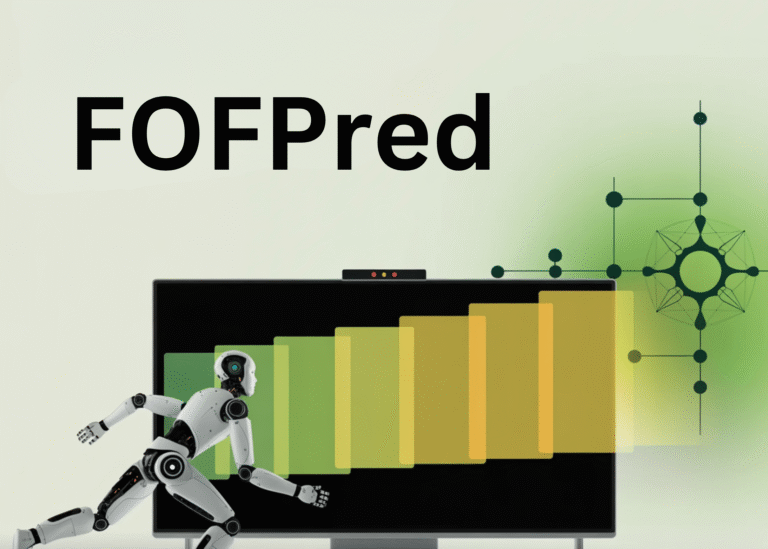
Salesforce AI Introduces FOFPred: A Language-Driven Future Optical Flow Prediction Framework that Enables Improved Robot Control and Video Generation

Salesforce AI research team present FOFPred, a language driven future optical flow prediction framework that connects large vision language models with diffusion transformers for dense motion forecasting in control and video generation settings. FOFPred takes one or more images and…

Read MoreSalesforce AI Introduces FOFPred: A Language-Driven Future Optical Flow Prediction Framework that Enables Improved Robot Control and Video Generation

How AutoGluon Enables Modern AutoML Pipelines for Production-Grade Tabular Models with Ensembling and Distillation

In this tutorial, we build a production-grade tabular machine learning pipeline using AutoGluon, taking a real-world mixed-type dataset from raw ingestion through to deployment-ready artifacts. We train high-quality stacked and bagged ensembles, evaluate performance with robust metrics, perform subgroup and…

Read MoreHow AutoGluon Enables Modern AutoML Pipelines for Production-Grade Tabular Models with Ensembling and Distillation

A Coding Guide to Anemoi-Style Semi-Centralized Agentic Systems Using Peer-to-Peer Critic Loops in LangGraph

In this tutorial, we demonstrate how a semi-centralized Anemoi-style multi-agent system works by letting two peer agents negotiate directly without a manager or supervisor. We show how a Drafter and a Critic iteratively refine an output through peer-to-peer feedback, reducing…

Read MoreA Coding Guide to Anemoi-Style Semi-Centralized Agentic Systems Using Peer-to-Peer Critic Loops in LangGraph

Why it’s critical to move beyond overly aggregated machine-learning metrics | MIT News

MIT researchers have identified significant examples of machine-learning model failure when those models are applied to data other than what they were trained on, raising questions about the need to test whenever a model is deployed in a new setting.…

Read MoreWhy it’s critical to move beyond overly aggregated machine-learning metrics | MIT News